
An independent record of roadway surveillance
142,767 license plate readers, mapped.
Automated license plate readers photograph and log every car that passes them. Finding Flock tracks where these cameras have been reported across the United States — camera by camera, city by city — using open, volunteer-verified data.
Updated September 22, 2026 · Source: OpenStreetMap contributors · Download the data
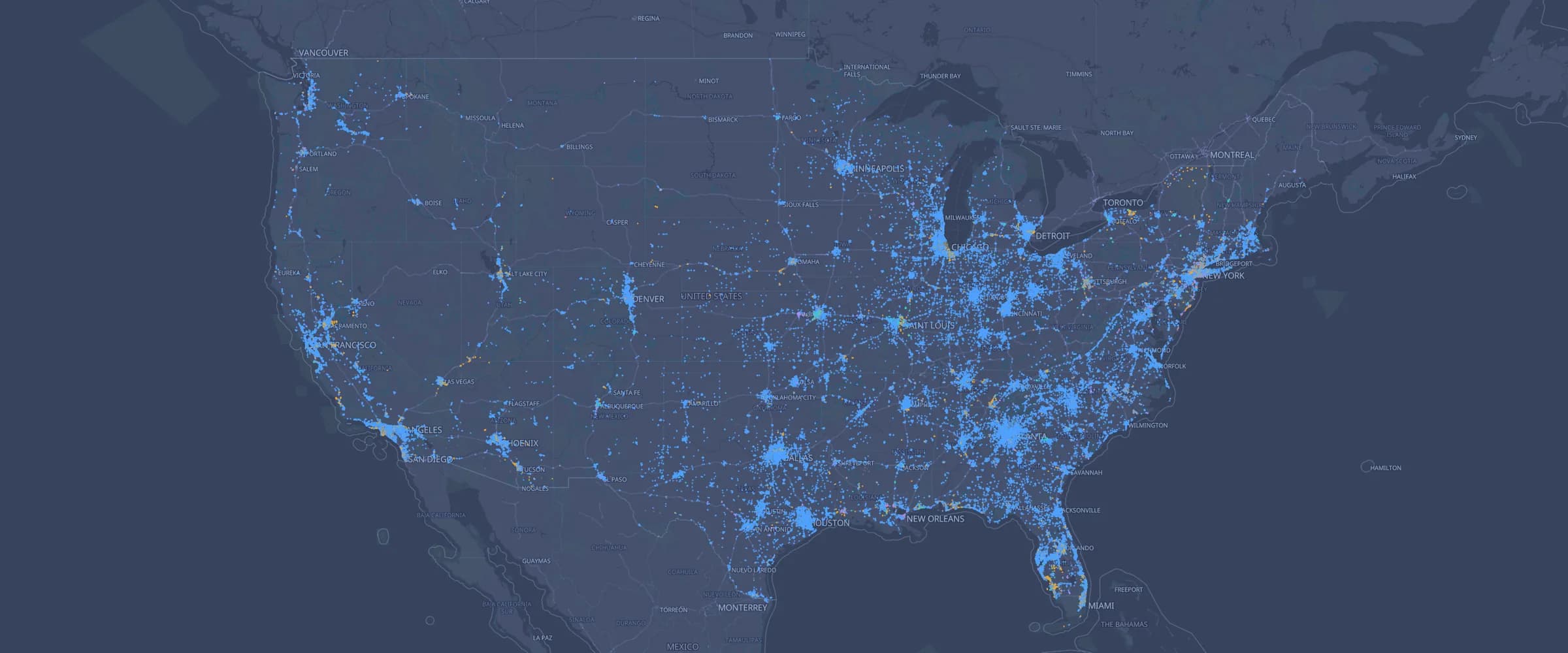
Every dot is a reported camera. Search your street.
Open the map →- Houston, TX2,430
- Chicago, IL1,808
- New York, NY1,306
- Dallas, TX942
- San Diego, CA732
- Atlanta, GA638
- Indianapolis city (balance), IN586
- San Jose, CA584
- Detroit, MI559
- Oakland, CA533
- Kansas City, MO499
- San Francisco, CA488
The technology
What is an automated license plate reader?
An automated license plate reader, or ALPR, is a fixed camera that photographs every vehicle that passes it and uses computer vision to turn each photo into a searchable record. The largest vendor of this technology in the United States is Flock Safety, whose cameras are installed by police departments, homeowners associations, and businesses; other manufacturers on American roads include Motorola Solutions, Genetec, and Leonardo.
Each record typically includes the plate number and state, the vehicle’s make, type, and color, and identifying details such as bumper stickers, roof racks, and visible damage. The records are timestamped, location-stamped, and held in databases that participating agencies can search — including, in many cases, agencies in other cities and states connected through shared lookup networks. The cameras photograph every passing car, not only vehicles connected to an investigation.
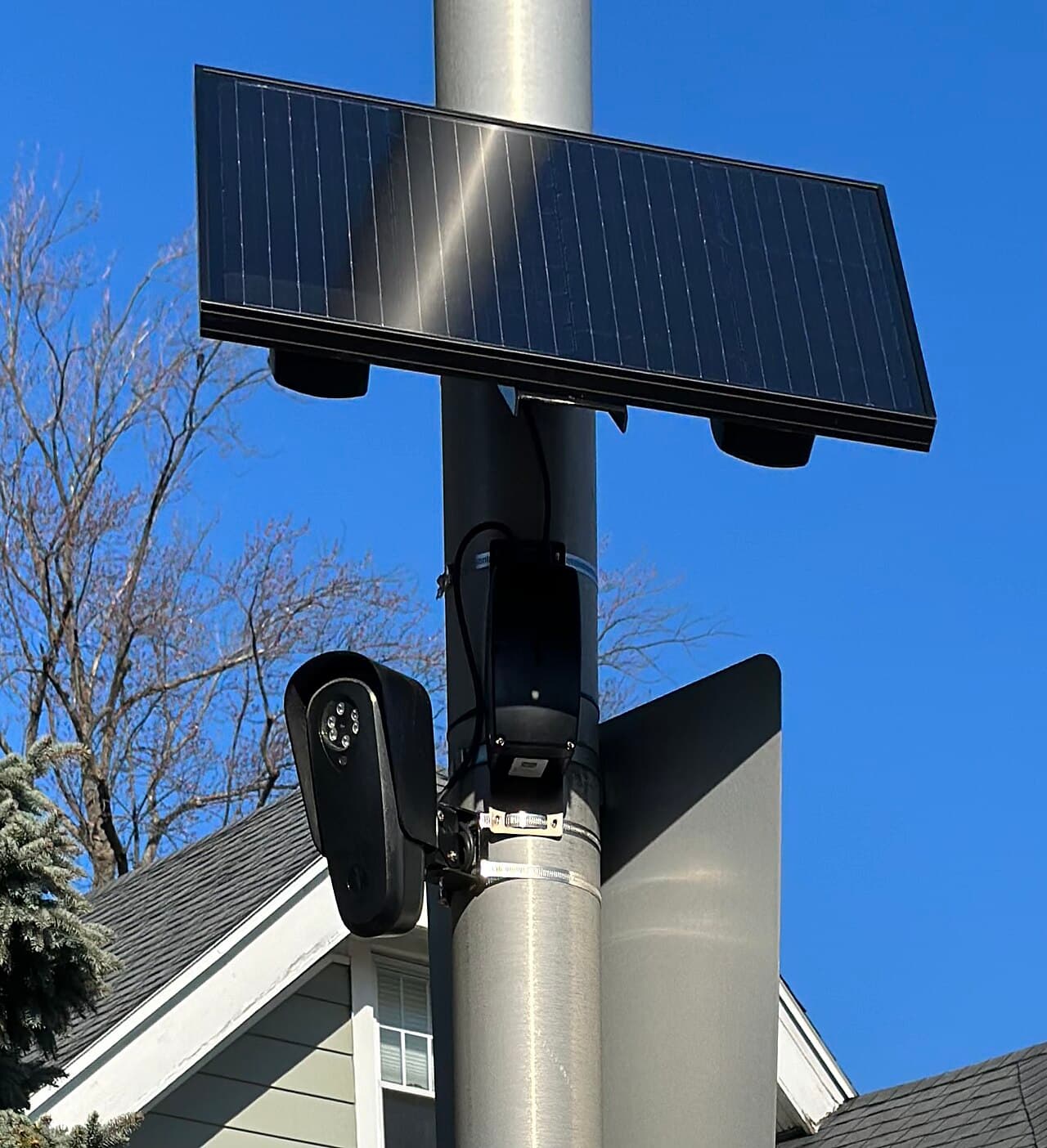
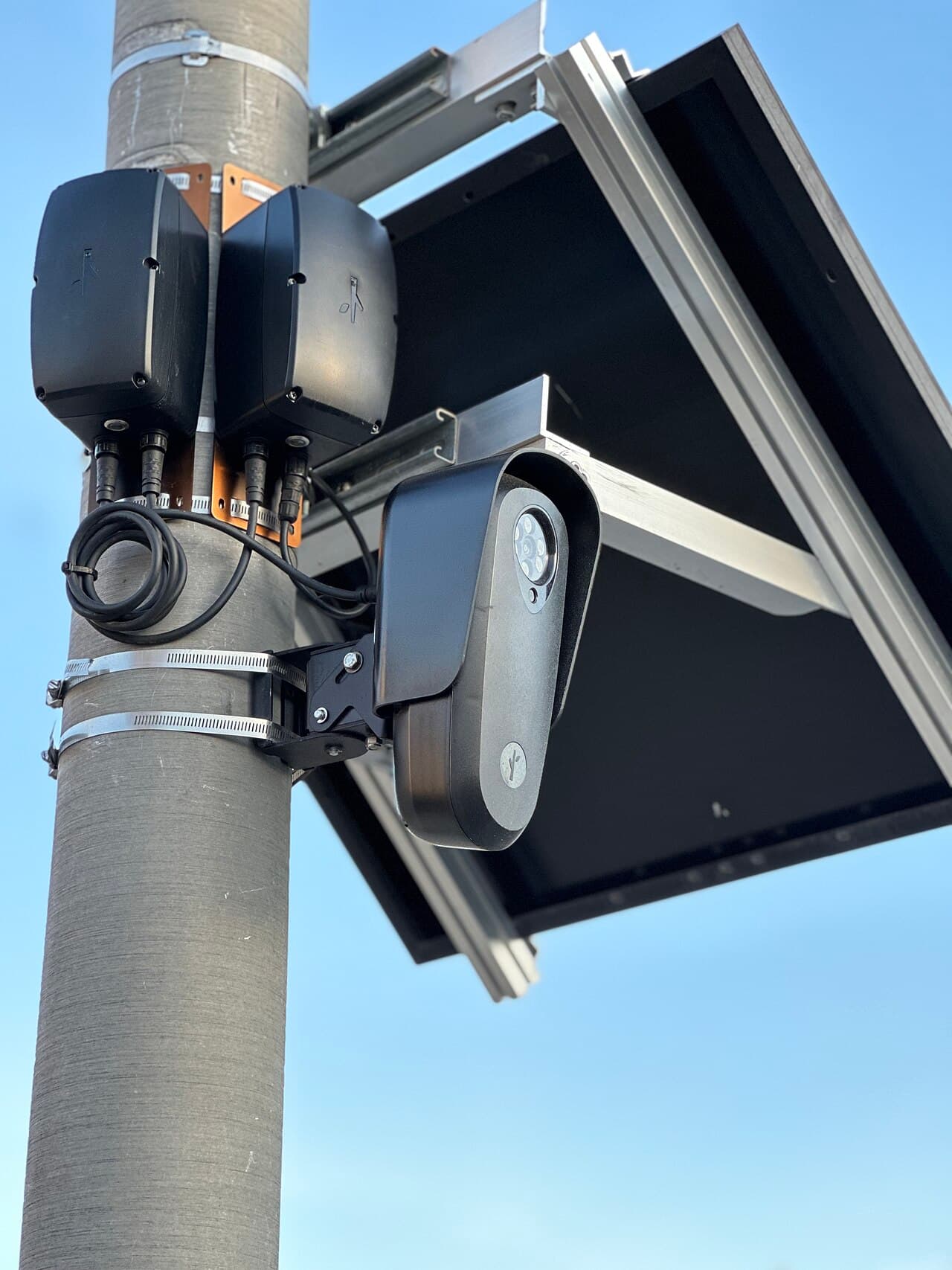
The cameras are typically mounted on slim poles at intersections, highway on-ramps, and neighborhood entrances, most often powered by a small solar panel. This site documents where they have been reported, who makes them, and — where volunteers have recorded it — which direction they face.
142,767
cameras documented on this map
OpenStreetMap contributors, September 22, 2026
20+ billion
vehicle scans per month across Flock's network
NBC News, 2025
5,000+
law-enforcement agencies use Flock cameras
Company statements, reviewed August 11, 2026
30 days
default data retention, before deletion
Flock Safety evidence policy
~70%
of the U.S. population lives within the network's coverage
80+
cities have canceled or shelved Flock Safety contracts since 2025
State of Surveillance / Newsweek, May 2026
The record
What one drive-by becomes
A single pass in front of one camera produces a profile the industry calls a “vehicle fingerprint” — searchable by any of its parts, with or without the plate.
Roof racks and accessories
part of the profile
Make, model, and color
classified by computer vision
Bumper stickers and decals
logged as search terms
License plate + state
read by OCR
33.74886, -84.38951 · 2026-08-08 16:02:41 UTC
In the field
Learning to recognize them
The most common configuration is unmistakable once you know it: a small black camera about the size of a shoebox, mounted on a slim pole and topped with a tilted solar panel. They stand at intersections, at the entrances of subdivisions and shopping centers, and along arterial roads — angled to face the rear of passing traffic, where the plate is.
Read the full visual identification guide covering each vendor’s hardware →
Identification
What a Flock camera looks like
A field guide to recognizing automated license plate readers: Flock Safety's Falcon on its slim pole and solar panel, Motorola and Vigilant fixed units, Genetec AutoVu, and Leonardo ELSAG hardware.
Read the article →
By the numbers
How many license plate readers are there?
There is no public registry of automated license plate readers, and the figure quoted in national coverage is a crowd-sourced count — the same lineage as ours. What that number measures, and how it grew from 30 mapped cameras in 2019 to more than a hundred thousand.
Read the article →
Your options
Can you opt out of Flock cameras?
There is no general opt-out from Flock's license plate readers, and the SafeList is not one. What a resident can actually do: the narrow municipal opt-out lists, the limits state law already imposes, the audit logs agencies publish, and the decision that removes cameras outright.
Read the article →
Explainer
What is a Flock camera?
How Flock Safety's license plate readers photograph every passing vehicle, extract a searchable "vehicle fingerprint," and share it across a nationwide network of police departments, HOAs, and businesses.
Read the article →
Law & policy
License plate reader laws, state by state
There is no federal ALPR statute. This reference tracks the state laws governing automated license plate readers — retention caps, warrant requirements, and sharing restrictions — with links to each statute.
Read the article →
Tracker
Cities that have dropped Flock Safety
A cited, regularly reviewed tracker of US cities and counties that have canceled, declined to renew, paused, or voted down Flock Safety camera contracts — and the reasons they gave.
Read the article →
Common questions
What people ask
What is a Flock camera?
A Flock camera is an automated license plate reader (ALPR) made by Flock Safety, an Atlanta-based company that sells surveillance cameras to police departments, homeowners associations, and businesses. Its most common model, the Falcon, is a small black camera on a slim pole, usually powered by a tilted solar panel. It photographs every vehicle that passes and logs the plate, time, and location. Roughly 80% of the license plate readers documented on this site are made by Flock Safety.
What do Flock cameras record?
Flock's cameras capture still photographs of passing vehicles and use computer vision to extract the license plate, state, vehicle make, type, and color, and distinguishing details such as bumper stickers, roof racks, and visible damage — a profile the company calls a "vehicle fingerprint." Records are timestamped and location-stamped, and are searchable by attribute even without a full plate. The company states its plate readers do not use facial recognition.
How long do license plate readers keep data?
Flock Safety's default retention period is 30 days, after which footage is deleted unless it has been saved to an investigation. Actual retention varies by contract and by state law — Virginia, for example, caps ALPR retention at 21 days. Data accessed through inter-agency sharing networks may persist in other agencies' systems under their own policies.
Are license plate readers legal in the United States?
There is no federal law governing automated license plate readers, and they are currently legal in most of the country. Roughly a third of states have statutes regulating how they can be used or how long data can be kept. Their constitutionality is actively being litigated: an ongoing Fourth Amendment challenge to Norfolk, Virginia's camera network is before the Fourth Circuit Court of Appeals, and the Supreme Court's 2026 Chatrie decision on location tracking has sharpened the legal questions around long-term, warrantless location records.
Where does this map's data come from?
Camera locations come from OpenStreetMap, where volunteers document license plate readers they observe, including the manufacturer and the direction the camera faces. Finding Flock refreshes its copy of that data, verifies its structure, and renders it here. The data is licensed under the Open Database License and is independent of any camera vendor, police department, or government agency. Because it is documented by volunteers, coverage lags reality: a camera missing from the map is not evidence there is no camera.
How do I report a camera near me?
Add it to OpenStreetMap. Create a free OpenStreetMap account, drop a node where the camera stands, and tag it as a surveillance device of type ALPR — the map's editing tools and community guides walk through the exact tags. Once the edit is accepted, it will appear on Finding Flock after the next data refresh.
Why are cities canceling their Flock camera contracts?
By May 2026, at least 80 American cities and counties had canceled, deactivated, or declined to renew Flock Safety contracts, according to the State of Surveillance tracking project, as reported by Newsweek. Reasons vary by city. A Los Angeles Police Department audit found a high rate of false-positive alerts; other councils pointed to reports of federal agencies accessing local camera data without authorization, to subscription costs, and to transparency concerns about how the systems were adopted and audited. Some cities later reinstated cameras under tighter policies.